

Forum Replies Created
-
AuthorPosts
-
If you can find a local outlet that sells furniture or suitcases (or both!), get some large sachets of silica gel from them. Wherever you store your tank, loosely close the apertures up – if only for dust – but dangle a couple of silica gel sachets inside on wires. They will take some moisture out of the air.
Could you blow warm dry air through it with a hairdryer, then dangle some silica gel sachets inside it and then wrap it all up in polythene sheet while the air is till dry? It might be better than nothing and would probably be enough under the circumstances.
As Peter says – wing removal is straightforward. Seeing is believing:
Several options.
Try local crash repair places – but they are probably going to prioritise lucrative insurance jobs over small work. And they won’t know Ds.
Rust. sounds like you will need metalwork doing. it might be best to let somewhere that knows Ds looks at what is needed, source the repair panels and potentially do the work. They are unlikely to quote cost until they take the job on and start removing paint and rust and see the scale of things. South East? you could try contacting PallasAuto down at Northfleet in kent. If they’re not interested in taking a small job on, they may at least be able to refer you to a company they use/ work with.
You could try Jamie at DSWorkshop but I think he uses someone else to do his paintwork.
How about Chevronics in Hitchin, north of London.
the big problem you will have is that most places are fully stacked up. Sometimes for more than a year. As peter says, your best course of action is to search around for someone, agree the broad work and get put in their diary. in the meantime leave it alone or try to delay further rust yourself.
Thanks. I know ‘reverse crunch’ is used in bvh set up but a car with a clutch pedal doesn’t have a slave cylinder and so not the same push rod. I’ve just looked at one of the ‘servicing the goddess’ videos and for a car with clutch pedal, Adie uses the degree of free play down at the adjuster as the indicator of correct setting.
I looked up that pushrod in the parts manuals. Originally a 90mm rod was efi-only, but was adopted across the DS range in July 72 (for 73 model year). that coincides with the universal adoption of the diaphragm clutch across the range (had been efi-only), so that seems to be the reason. It means that later carb cars already have the longer pushrod, and that my 90mm find could be from the gearbox of a later carb car.
Congratulations. So along with mine, that’s two more 68s back on the road.
There are a few bits in the accelerated idling device. Have you got them all? There is the slide valve:

And then the plunger on the end that seals the hole.
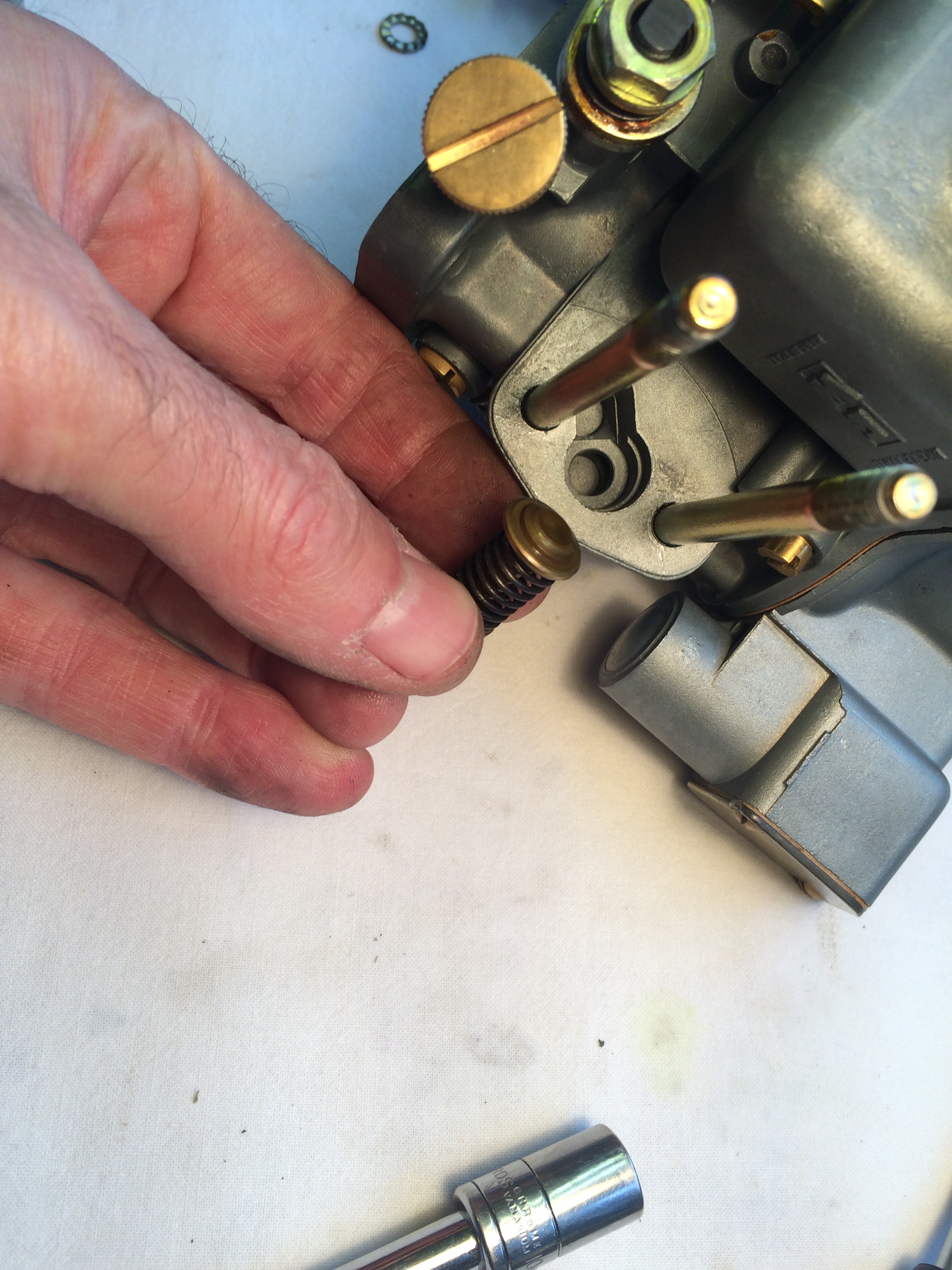
Notice also the slit brass sleeve around the plunger.

I can’t follow your logic re: timing, but i suspect that is because there isn’t any 🙂 If you’re happy, you’re happy.
Suspension. Yes, one sphere could have deflated at a different rate to the other, or even failed. As you say – try swapping the spheres over to the other sides.
It’s possible to have them tested to establish their remaining pressure. But if you can afford it, buying two new ones *should* give you a better ride. And if it doesn’t well – you’ve eliminated the spheres as the cause.
It’s worth giving the height corrector a clean out but be warned that it contains many small and easily lost/ damaged parts. Also if, in removing/ fitting it you upset/ alter the rods and levers that are connected to it, your suspension may start acting oddly. Just be careful.
Air. That extender normally stays fixed to the car and the sphere unscrews from it. My understanding is that the high pressures in the system cause the fluid to break up air pockets into many smaller bubbles. Bleeding the system allows it to carry this aerated fluid away back to the reservoir. Regardless of the mechanics, if you bleed the system after changing the spheres you should be fine.
How are you getting on with your clutch these days Ian Anderson?
I’m digging this thread up just to add to the pool of learning (or confusion?).
Having got my car on the road, I’ve tried setting up the bvh using Adie Pease’s “reverse crunch” method: as the reverse gear has no synchromesh, you put the car in reverse gear and if there is a ‘crunch’ it means the clutch is dragging. You gradually wind the adjuster nut in (tighten it) until there is no crunch when you put the car in reverse and that is the correct setting point…..
As i wrote in an earlier post here, with a new clutch pressure plate and friction plate from Citroen Classics my nut is now fully wound in and i’m still getting a slight ‘crunch’. i’ve run out of adjustment. The car drives, but i know it’s not quite right. These days Citroen Classics say their friction plates are (the correct) 8mm thick. I don’t know if they said that when i bought mine a couple of years ago. Doesn’t mean they weren’t and I assume the one i was sold was fit for purpose.
A friend in the US said that when he rebuilds engines/ clutches, he now puts a washer behind the fulcrum of the clutch fork. He says this buys a few extra mms of adjustment on the clutch. As my engine is back in the car now, this doesn’t feel like an option but i had a similar idea. The clutch push rod (between the clutch cylinder and adjuster) on a ‘standard’ Ds is 80mm long. BUT, on an efi car it’s 90mm long. If i fit a longer push rod, then the extra length will mean that I’ll have more adjuster sticking out the back of the fork and more scope to wind it in.
if i use the full 90mm rod, there is a danger that the hex of the adjuster starts to rub on the gaiter of the steering rack. I would also want to be sure that when there is no pressure in the cylinder, the longer rod doesn’t prevent the clutch fork travelling fully as it should (though the notional distance between cylinder and fork will be about the same – it’s just that it will be made up of more push rod and less adjuster).
I happen to have two bvh gearboxes from vehicles unknown under sheeting behind the shed at the end of the garden. The first rod i pulled out was of course 80mm, but the second was 90mm 🙂
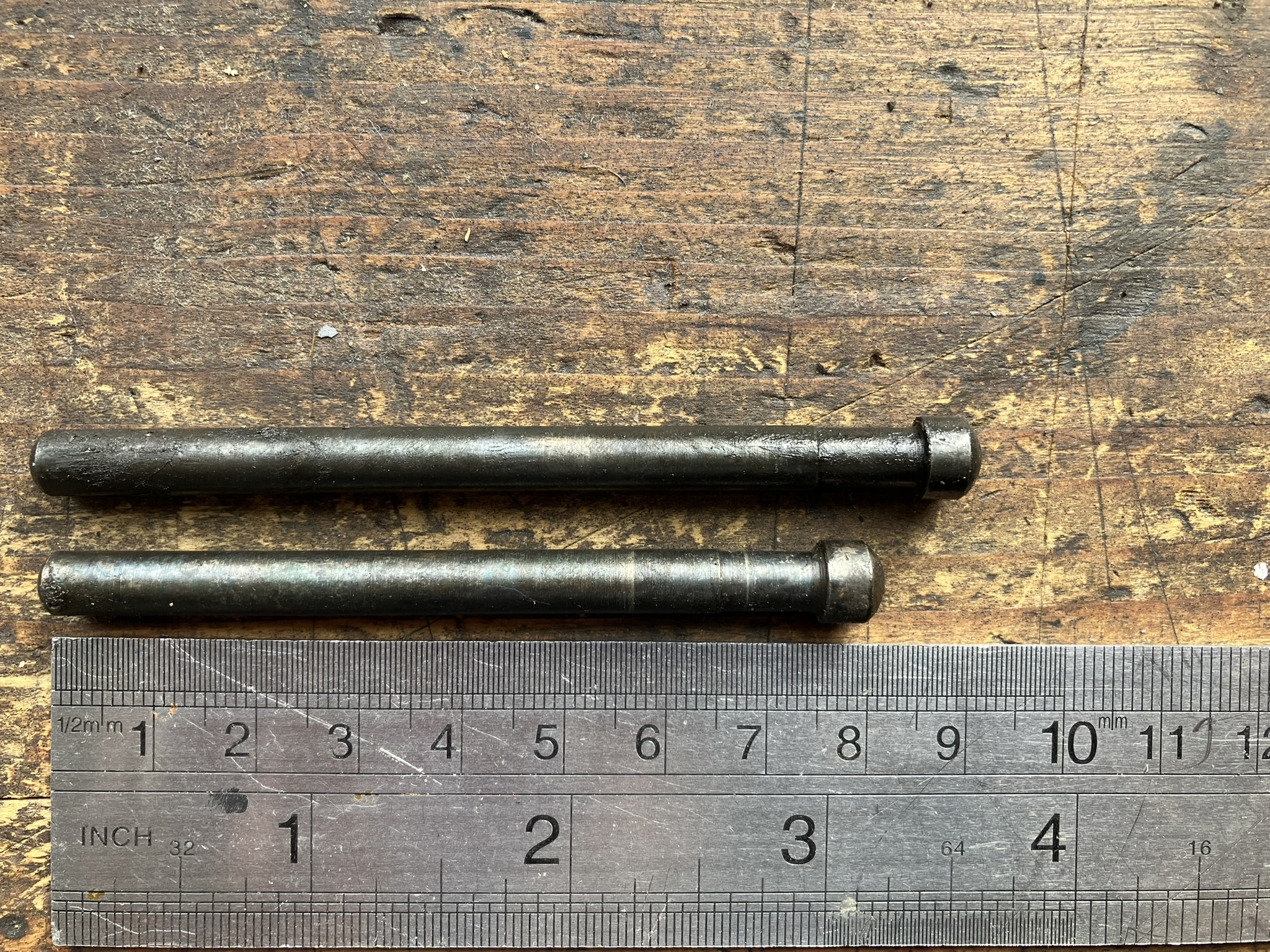
I’m minded to try the full 90mm rod to start with, and if that creates complications with the rack, then maybe cut it down by a few mms and then by a further few mms if problems remain. If i ended up with an 83mm rod, it would be no worse than the washer trick. It’s tight behind the radiator, but I *think* it’s relatively simple to pull out a rod and slip another in.
Ultimately of course, this will be a work-around and doesn’t explain why my new clutch has no more adjustment. As the clutch wears, i’d expect to have to turn the nut out, but that shouldn’t be for quite a while. I’m not the only one to experience this issue (see other messages in this thread from Ian) and there could be several reasons for it, including badly (re) machined parts, too thick plate.
I know you are (still?) restoring your car Colin. It was your blog that inspired me to do my own: imitation and sincerest form of flattery and all that.
Of that ownership, how long was it/ has it been off the road?
Back in the 80s and early 90s Ds were dirt cheap. I wonder if 60s Ds (of which we agree there was a majority) were seen as very dated and more readily scrapped – especially if they were LHS, with the earlier nose and had changed hands a few times. Whereas the cars bought in the 70s were possibly still in original ownership and of ‘recent memory’ so not scrapped so readily? When the interest in Ds picked up in the 90s, the cars you saw around you were the 70s survivors.
More personally, the story, as I was told it, was that my car (a 1968 LHM, wavey dash Pallas car) was the payment for two UK Club members (Dominic Raffo (RIP) and Geoff Rothon) going to France to re-plumb an LHS car to LHM in 1993. I’m not sure if it was an ex-pat living abroad. I’ll have to ask Geoff.
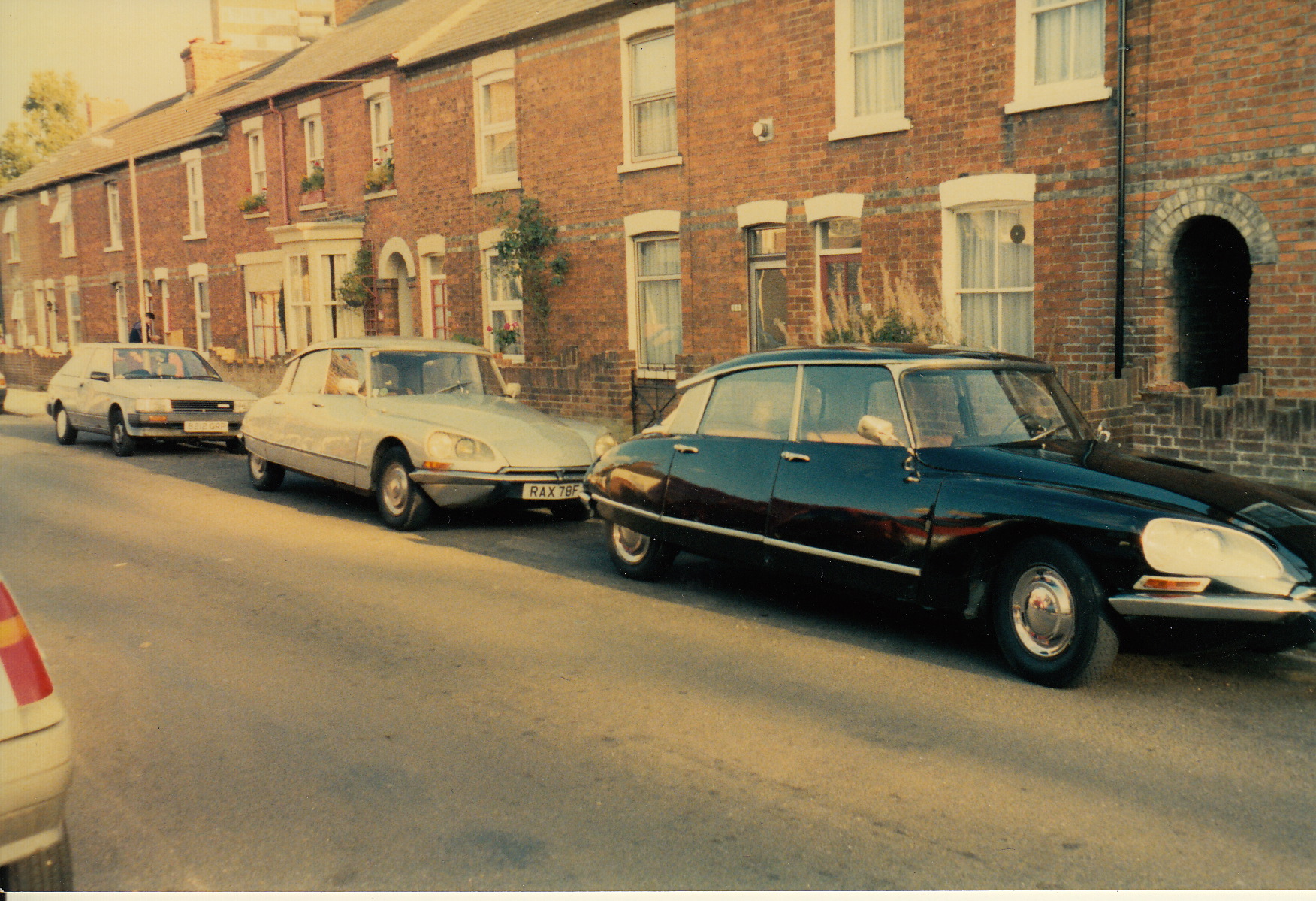
Geoff drove the car for a year before Dominic took ownership. I bought it off Dominic in 1995 for £1500. For a brief moment in time I owned two Ds. Both lived on the street. Here is a picture from summer 1995. Soon after I sold the black 1969 ID. I’m once again driving the gris palladium DS21 🙂
It’s a complex subject as there are many factors to consider. The vast majority of cars that are on sale or turn up at rallies seem to be 70s cars. Annual sales peaked circa 67 to 70 – but there were significantly more sales years before that of the earlier nose/ dash car, so you might expect to see more of those. But we don’t. the older the car, the more likely they experienced more wear, tear, accidents and rust. so that’s probably a factor. Maybe a big factor was their use of LHS – which rotted out pipes. Maybe that killed a lot of the earlier cars and they were scrapped or rusted away.
I think 70s cars may have had more rust-proofing (did they?) but steel quality declined in the 70s as Citroen changed their source I believe. So it’s swings and roundabouts.
Purely in my opinion, the button handle doors, and especially that mirror on the dash, still link those early third dash cars back to the 60s. In my eyes, the subsequent move to flush door handles and screen-mounted mirror mark those cars as 70s cars. Which i guess is exactly what Citroen intended at the time: keeping the car contemporary and relevant to extend the sales life.
It’s easy to think of the swivelling light-type nose as a 70s thing, but the first cars were on sale in 1967. And it’s easy to think of the ‘mid period’ dash as, well, ‘mid period’. But it was actually introduced as early as 1961. Of course beyond such superficial things, with the panels off, we can trace all our Ds back to the very first 1955 cars. Not much changed at all really.
So is that ‘1969 model year’ with a RHD wavey dash? I’d have thought they were very rare these days.
Splutter!!! 45 years!!! 1981 is only five/ six years after Citroen stopped selling brand new Ds. And your (69?) car would only have been 12 when it was taken off the road. 12 years on, 45 off – that’s almost 80% of it’s life off the road.
Tell us more? What’s the story? New thread please 😉
I’m getting some bits from mark rueneuf over in Holland and have asked him to add-in one of these. If it’s still within spec, i’ll use it, if not i’ll have two to tinker with.
Given that my car was off the road for 27 years (less flexing and fatigue in the tube) I wonder how many other switches are out of spec?
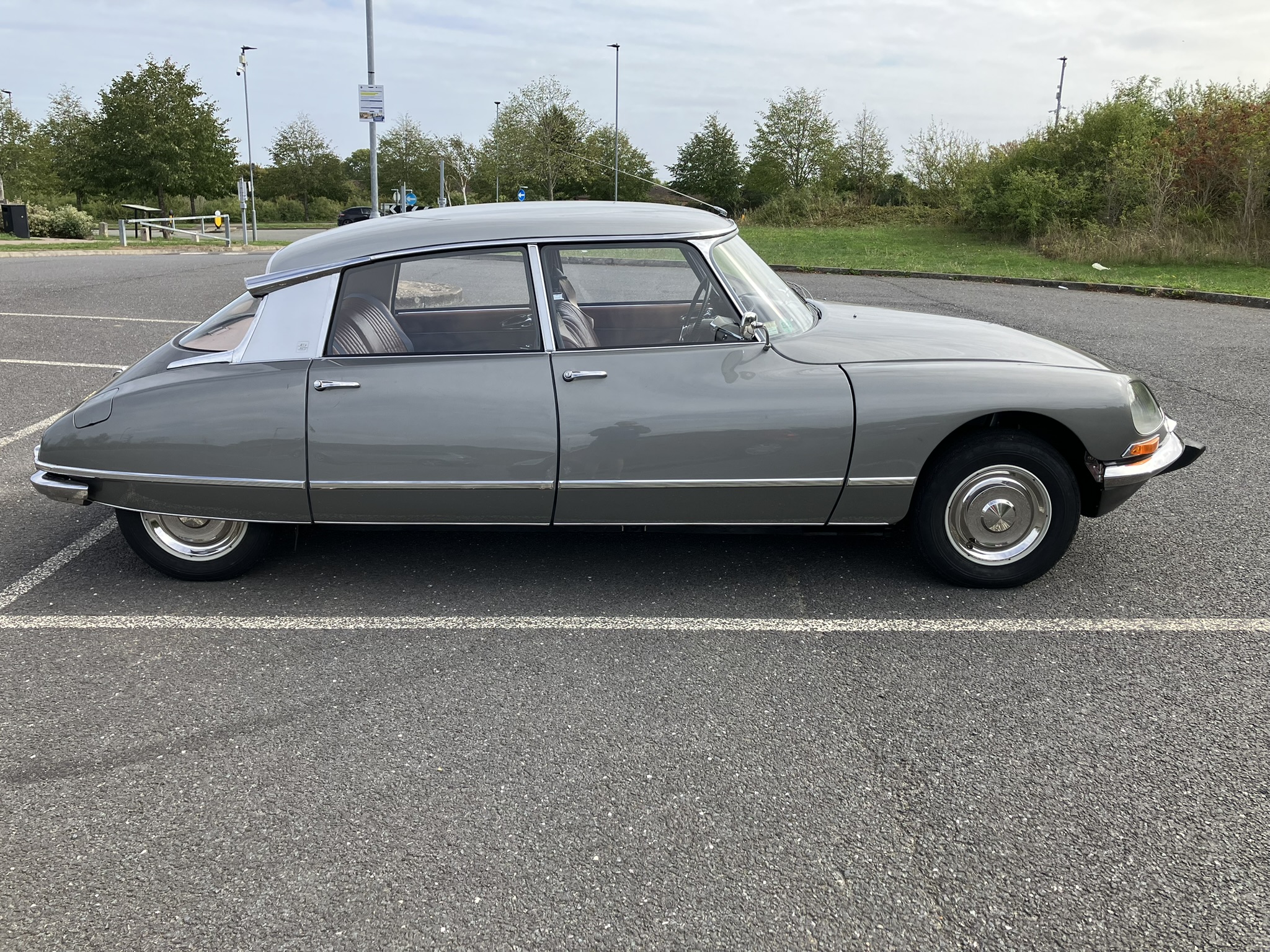
The final bits of trim are back on the car and it’s about as ‘together’ as it can be. I’m now test driving and working through an autumn snag list.
When i put the dashboard in i found that the red hydraulic pressure warning light on the dash only worked intermittently. eventually it completely packed up.The light is negatively earthed. it’s controlled by a hydraulic switch down at the brake mushroom that breaks the lights path to earth when the car reaches a certain pressure. I traced the circuit and confirmed my suspicion that the switch wasn’t closing and making a circuit. Dirty contacts the suspected cause.
I took the switch off the car yesterday. It’s part of the mushroom brake assembly.
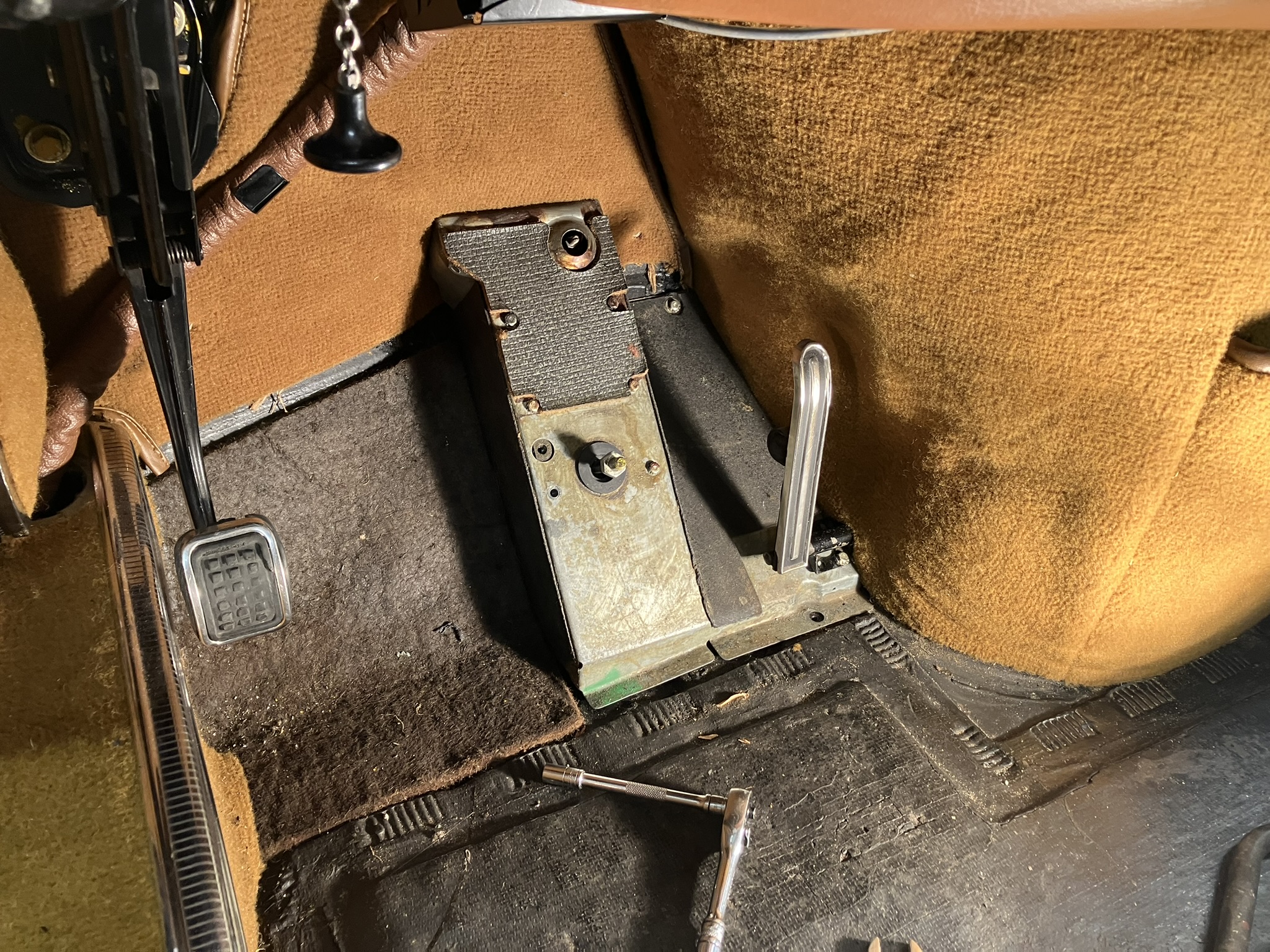
It’s a calibrated and (then) sealed unit.

Not my photo but inside it looks like this. A simple screw pin that makes contact with the curved hydraulic pipe. As the pressure rises, the pipe straightens very slightly and contact is broken.
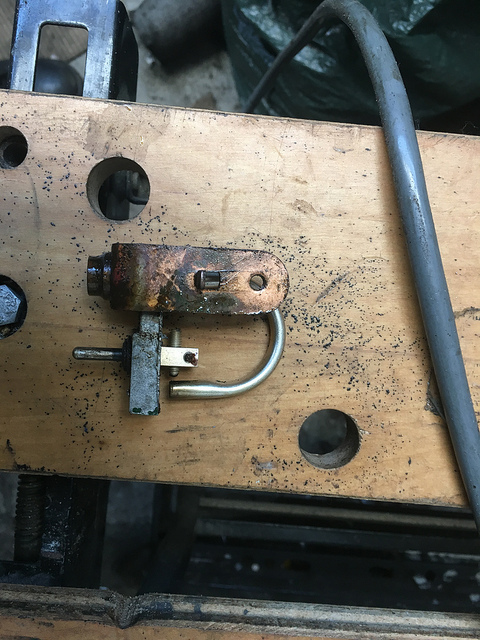
My cover is still sealed on. By a combination of flushing with switch cleaner and compressed air i got it going again. I’m lucky enough to have a Citroen hydraulic test bench so took the opportunity to follow Operation D.453-0 and check the unit out.

VERY much to my surprise, i found the light cut out when pressure reached 23 bar. it’s meant to cut in/ out at between 60 and 70 bar! So if pressure drops to 60, your warning light comes on. mine won’t come on until it’s down to 23 bar! that’s way out of whack!
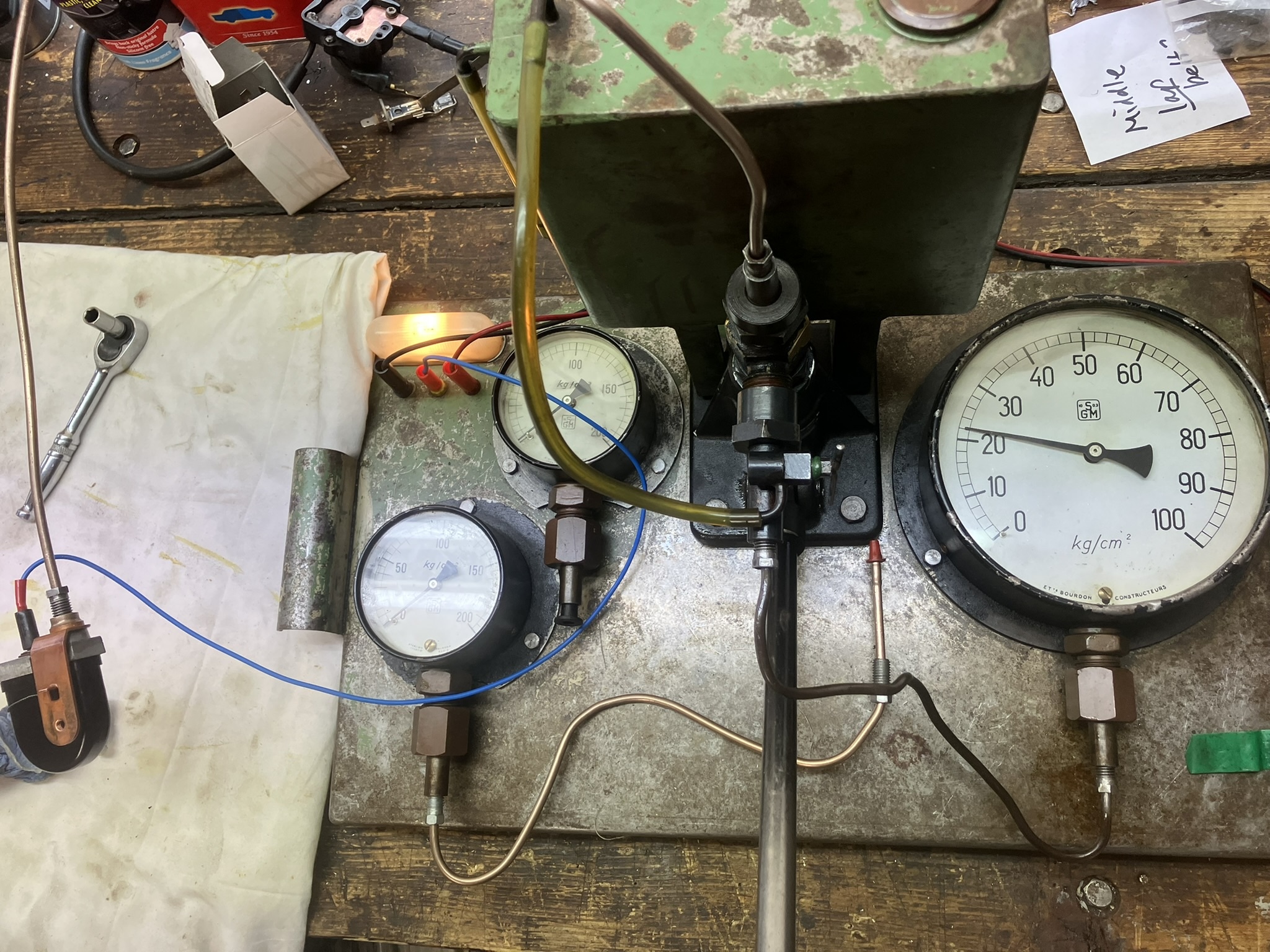
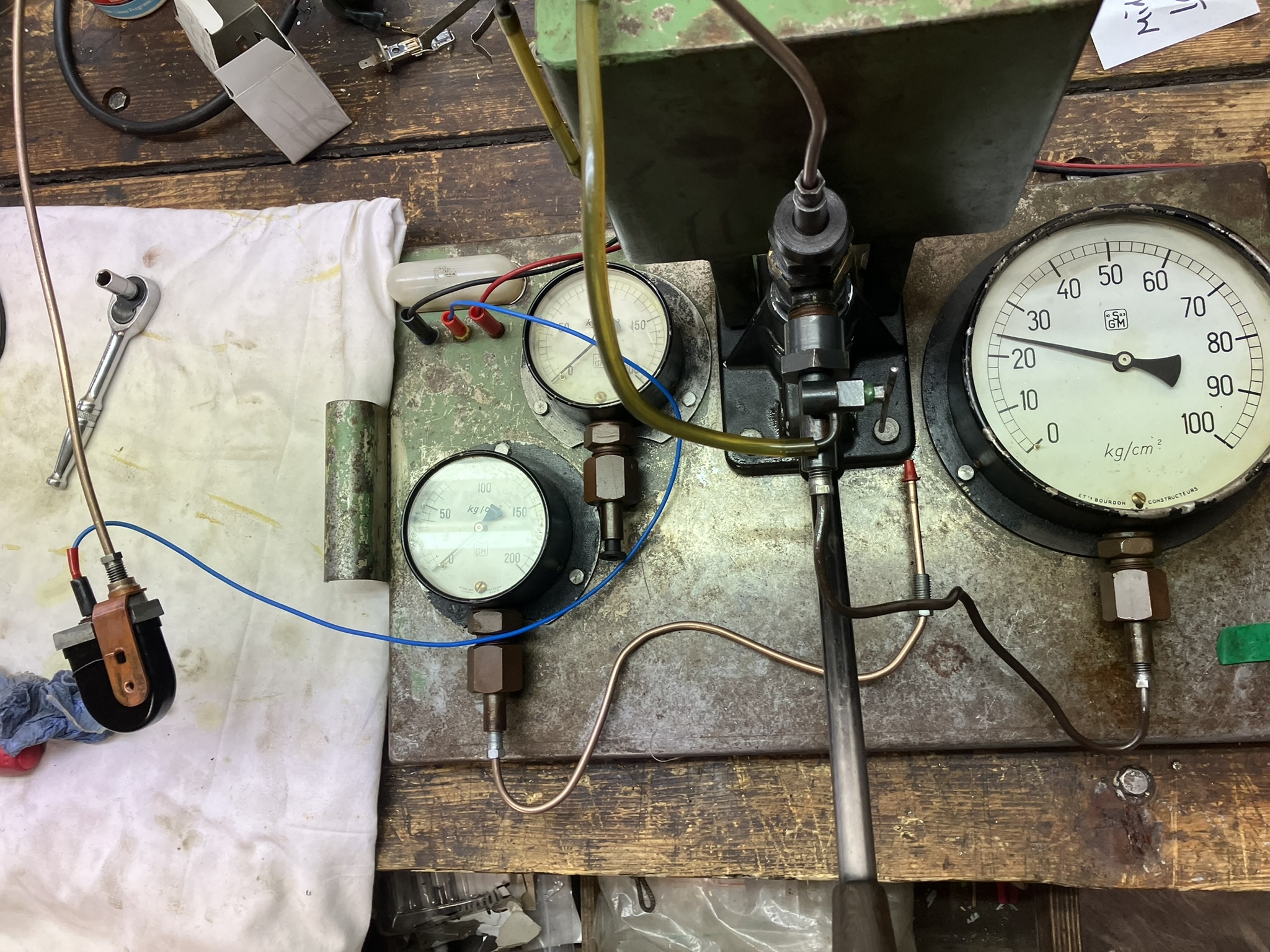
Citroen do NOT give instructions for recalibrating (though with pressure gauges it’s easy enough to do accurately) probably as it’s a safety device. Hence the wire seal. At least mine provides some kind of warning. I put the switch back on the car so i could continue road testing and the bloody thing isn’t working again! It looks like i will have to pull it off again at some point, break the seal and give it a good clean up. That alone might make it register within the correct range. if not, i can use my test bench to recalibrate it. But I’d still like a spare which – when tested – already worked in the correct range.
Today I spent the morning bleeding the brakes and am off for another test drive.
Hi
I got a pair of NOS Cibie headlights about five or six years ago, and I got a pair of NOS driving lights from Colin earlier this year.I think that, because i write a blog with a lot of detail, the assumption is that my work is immaculate (and that i know what i’m doing!). it’s not and i don’t! i’m pretty thorough (i think) but i cock things up. And have probably made mistakes that haven’t come back to bite me yet.
At the D rally two years ago, Olivier from French Classics brought along his newly restored 1969 US spec DS21 and it was a stunner. At that same rally, a guy turned up in a newly restored 1966 RHD DS21 and the work was brilliant. I put both of those above my work.
-
AuthorPosts