
Forum Replies Created
-
AuthorPosts
-
After thorough paint/ rust removal, I used a dot punch to mark the centre of the weld, then i made a deeper indentation with a 2mm drill. not all the way through. THEN I used the spot weld drill bit……
Nice work. And it’s nice to be reading about someone else’s achievements rather than me going on about what i’ve done.
Now would be a good time to check that the rod that links the height lever to the rear height corrector is free to move in its nylon eyes along the length of the sill. maybe grease them up.
My outer sills were good on the vertical faces but all rusted out at many points on the small horizontal lip (19 each side) where the screws that hold the sill covers had been. i didn’t fancy the work of trying to patch in so many thin pieces and for that reason i replaced the whole sills. But i think you were wise to keep your original sills. When you replace them, you don’t realise it at the time but it’s important to get the two lengths either side of the B pillars in the right spots relative to each other. you need to have the right distance between the holes where the door jamb screws go.
Those spot weld drills. I use those. I bought a Clarkes branded set that had quite a large ‘saw’ diameter (10mm?). That’s handy for making sure you catch all the spot, but they leave big holes. i bought some more that were slightly smaller (5/16″) and so cut out less.
I did MANY years of suddenly feeling motivated to work on the car from April, then rapidly losing that motivation come October. I made this summer the ‘big push’ to get the car 90% finished.
Don’t do it, put the carpet and cover back down.
Carpet has gone back down. No seal 🙂
We’re never too old to learn, are we? Bear in mind that i’ve not driven my car for 27 years but, when i did, I though the big red pressure light came on just about most times i put the key in the ignition. And i think i’ve always associated the light going out with the car being pressured and ready to drive away.
I fitted the recalibrated pressure switch yesterday. When i turned the key after bleeding the brakes, it came on. All good so far. When i started the car and built pressure, it went out. Also good. However I then put the car in low and depressurised the system and the light DIDN’T come back on!?! just like when it was calibrated at on 22 bar!
I left it over night but in turning on the key this morning, STILL no light. It took several pumps of the brake pedal this morning to get the light to first flicker and then stay on – so there clearly was some level of residual pressure in the brake system, even with the rest of the system depressurised. Closing the bolt on the regulator, starting the car and pressurising the system caused the light to go out again – as expected – but the car was still building pressure and was sitting on it’s bump stops and not ready to drive?
I did some reading – several owners manuals – and realised that Citroen separate the topics of the red light going on and off and the car rising and being ready to drive. The red light goes out when there is sufficient pressure in the BRAKE circuit, and the manuals say that when you go to start the car, the light MAY be illuminated – nodding to there being residual pressure after stopping the car.
In terms of car heigh, the manuals just say ‘wait a few minutes until the car had risen’. And this isn’t linked to the red light at all.
I suppose I shouldn’t be surprised as the red light is primarily about the ability to brake safely. I also found out that when i start my bvh, I should be putting my foot on the brake button. Didn’t know that. Not sure if it’s to stop the car lurching (as a bvh can do if parked up in gear) or if it’s to put the carb in its ‘slow idle’ mode. Anyway. i’ll try and remember…
So is this the point where i say i actually researched buying a tool and lead seals to replace the seal like the original had??
It was cheap – but I’m not that crazy. Yet.
Thanks for the offer Julian. The casing is not a sealed fit. It’s just enough to keep dirt out. A 3D version would do the same job. The whole pedal unit is in a box anyway so should escape most muck. Peter’s helped out with some handy 3D prints but in the first instance i’ll try a couple of different glues on it.
With its rolled head drilled off, the rivet was too short to reuse so….I made another one with brass tube! I didn’t really need to bother. Citrotech recalibrate them and simply shove an M4 screw and nut through. I think I felt that a rivet looked neater (who the hell is ever going to see??).
Doh! I meant to add this to my ‘nearly there’ thread…..
I can’t delete it from here now, but i will also add it to the ‘nearly there’ thread as follow up to the earlier posts.
Someone needs to add a post here about light stalks, main beams and relays so that we can all get back on topic.
Hydraulic pressure switch and associated warning light now working as Andre intended 🙂
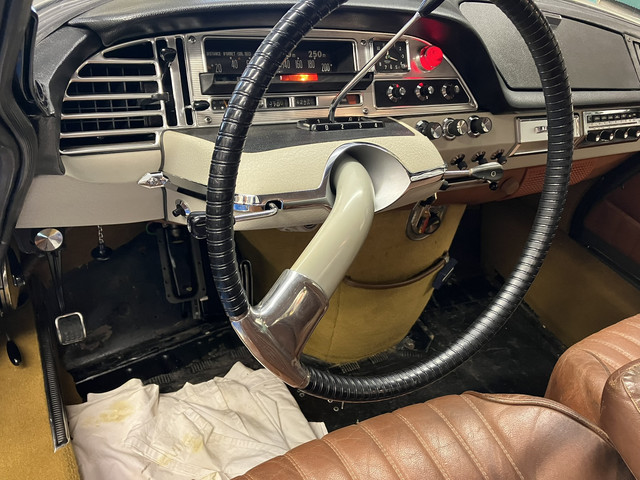
After I’d discovered that mine worked in a bench test, but operated at only 22 KG/cm2 (about 22 bar), I temporarily refitted it to the car. Frustratingly – it didn’t work on the car!
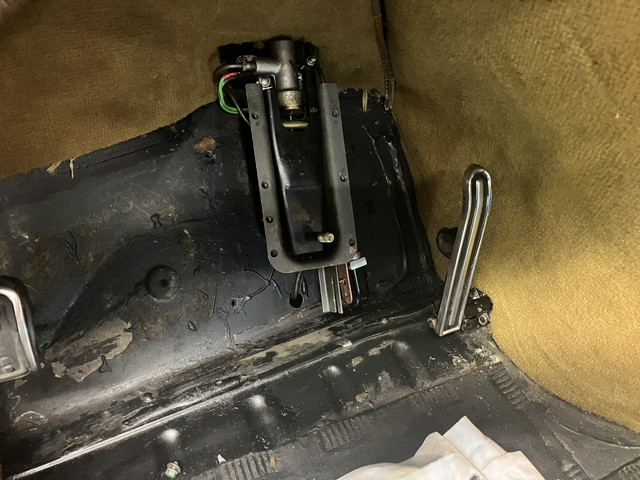
I got another from Holland and, on testing, it worked at 60 bar – just on the margins of ‘in spec.’. I removed my old one again and decided to recalibrate it while i was at it – just for the learning. It was no good as it was. It proved easy to re-calibrate but in removing the rivet holding its case on, the drill slipped and shattered the plastic case.
That being so, I planned to fit the other one I’d got from holland. But I decided to slightly recalibrate it so that it was in the middle of spec. About 65 bar. I could also clean the contacts. I removed the cover (carefully this time) and this is what i found. Piles of rust! It had looked fine from the outside.


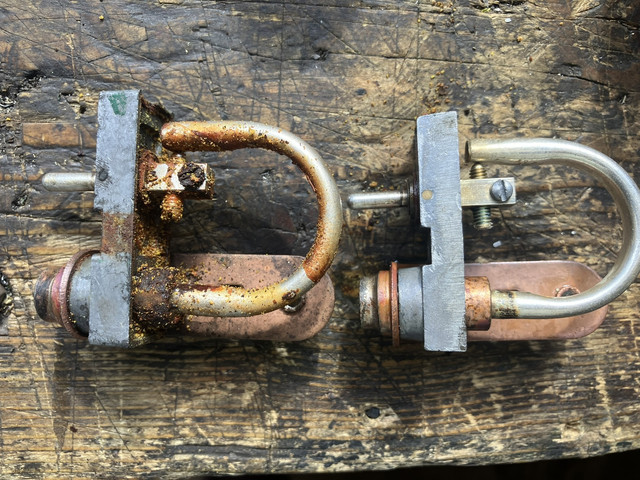
I’m so glad i didn’t just fit it in its 60 bar mode! In the end, i’ve used my original switch – recalibrated to 64 kg/ cm2 – and used only the cover from the spare i bought.
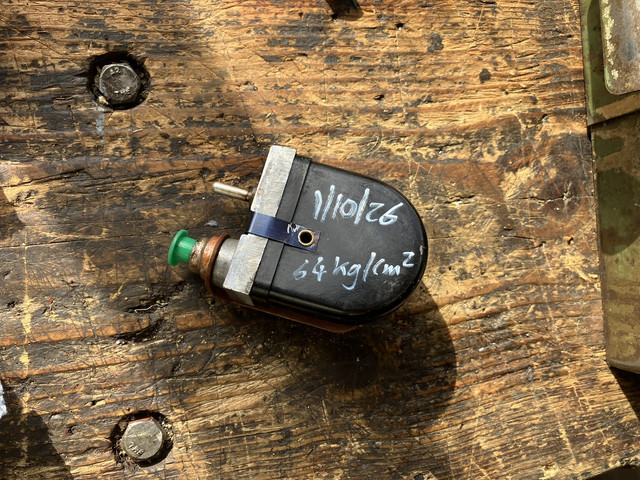
I think I’ve worked out why – when still in its 22 bar mode – it didn’t work when refitted. I’m guessing that there is residual pressure in the switch that is not released when the engine is turned off or even when the pressure regulator bolt is loosened. After refitting and starting the engine, I think pressure in my car didn’t drop to 22 bar or below – so my light never came back on. I think that – again, when it was in its 22 bar mode – if I’d opened the brake bleed screws, pressure would have dropped to zero and my light would have come on – but it still needed fixing.
Now that it’s correctly recalibrated, if pressure drops to anything below 64 bar the light will come back on. And, if my theory is correct, there can’t be that much residual pressure in the system.
Next/ last job is to bleed the front brakes again. then i can investigate the suspected air ingress on my carb.
Hydraulic pressure switch and associated warning light now working as Andre intended 🙂
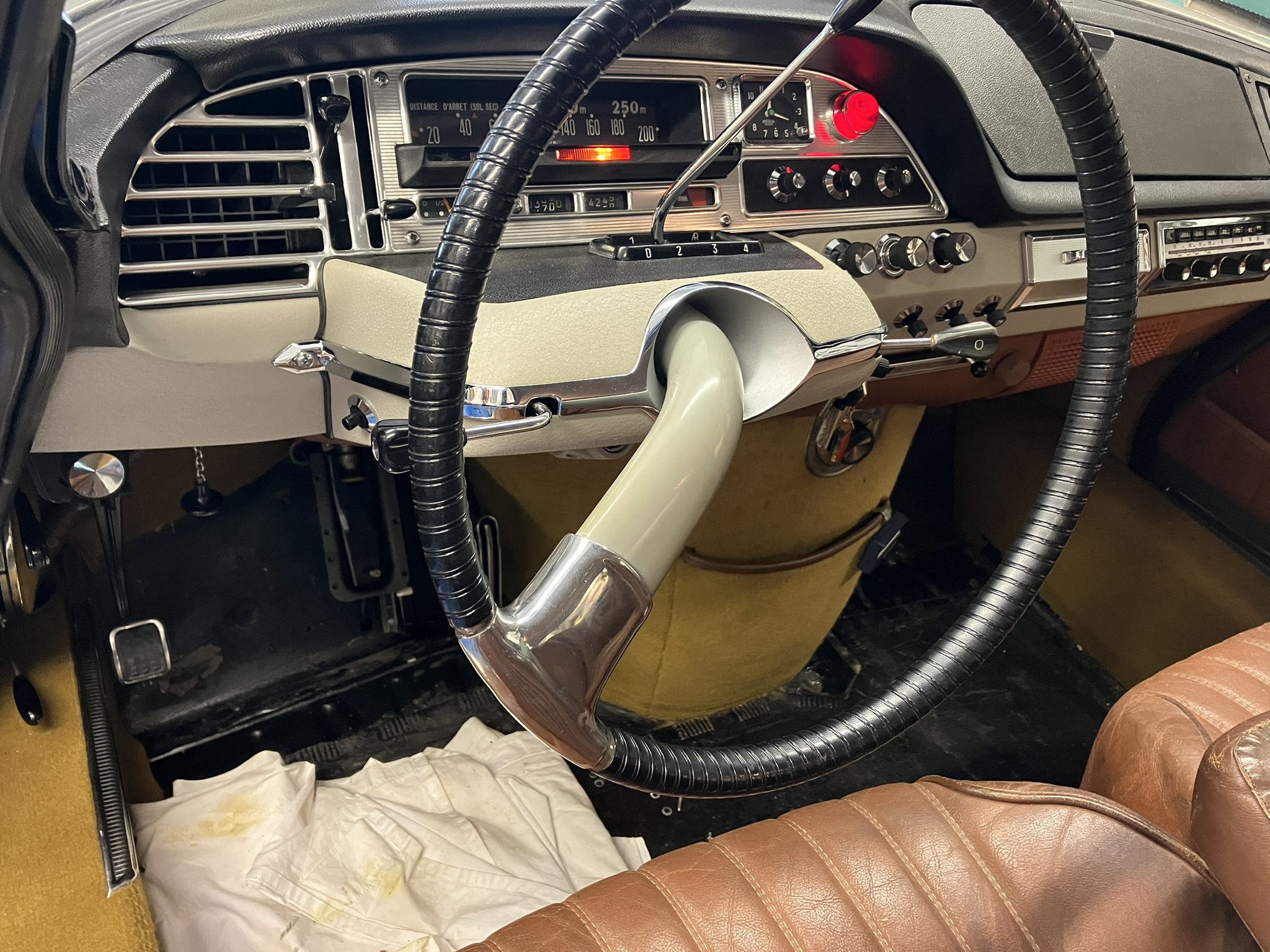
After I’d discovered that mine worked in a bench test, but operated at only 22 KG/cm2 (about 22 bar), I temporarily refitted it to the car. Frustratingly – it didn’t work on the car!

I got another from Holland and, on testing, it worked at 60 bar – just on the margins of ‘in spec.’. I removed my old one again and decided to recalibrate it while i was at it – just for the learning. It was no good as it was. It proved easy to re-calibrate but in removing the rivet holding its case on, the drill slipped and shattered the plastic case.
That being so, I planned to fit the other one I’d got from holland. But I decided to slightly recalibrate it so that it was in the middle of spec. About 65 bar. I could also clean the contacts. I removed the cover (carefully this time) and this is what i found. Piles of rust! It had looked fine from the outside.
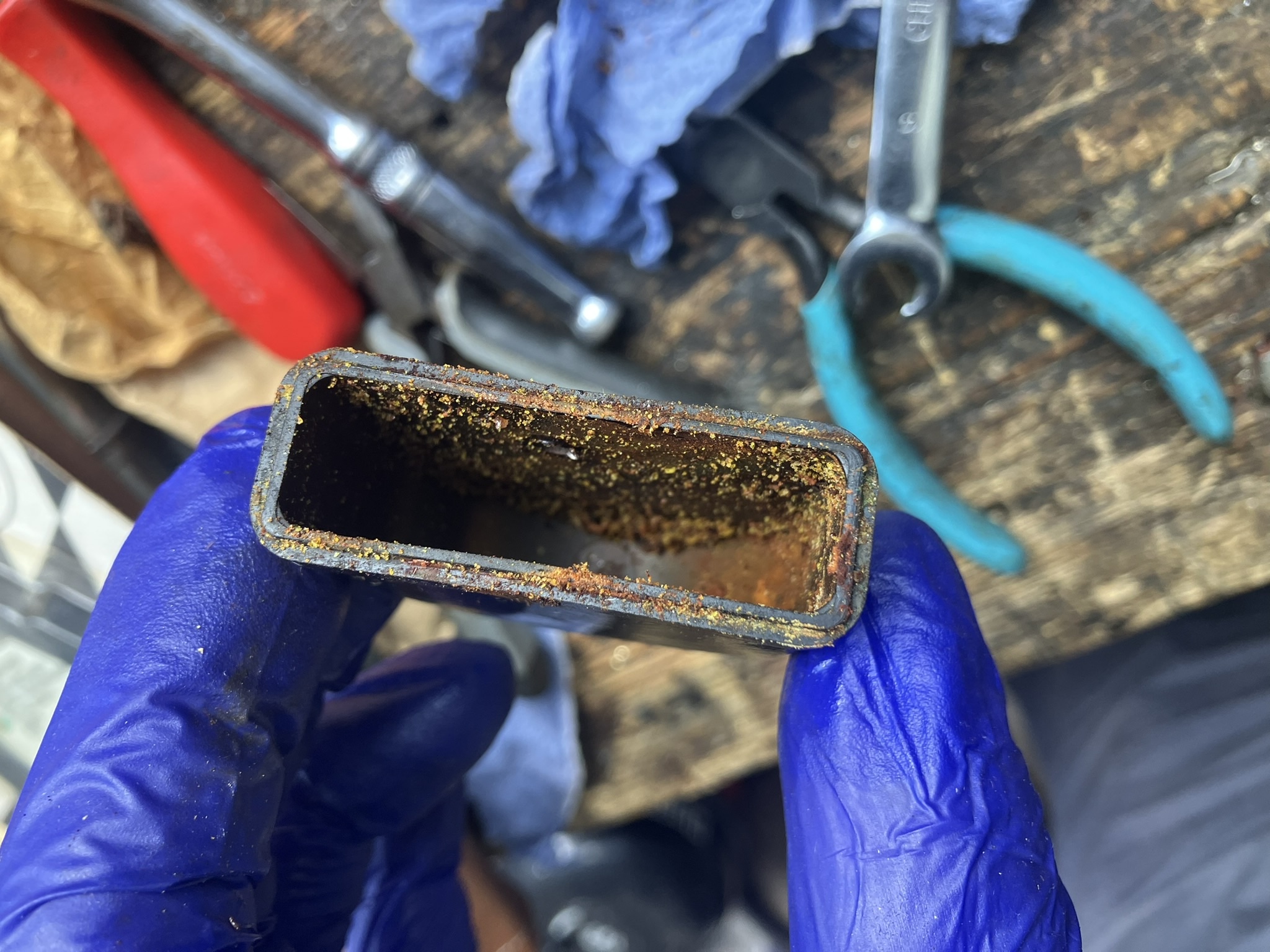
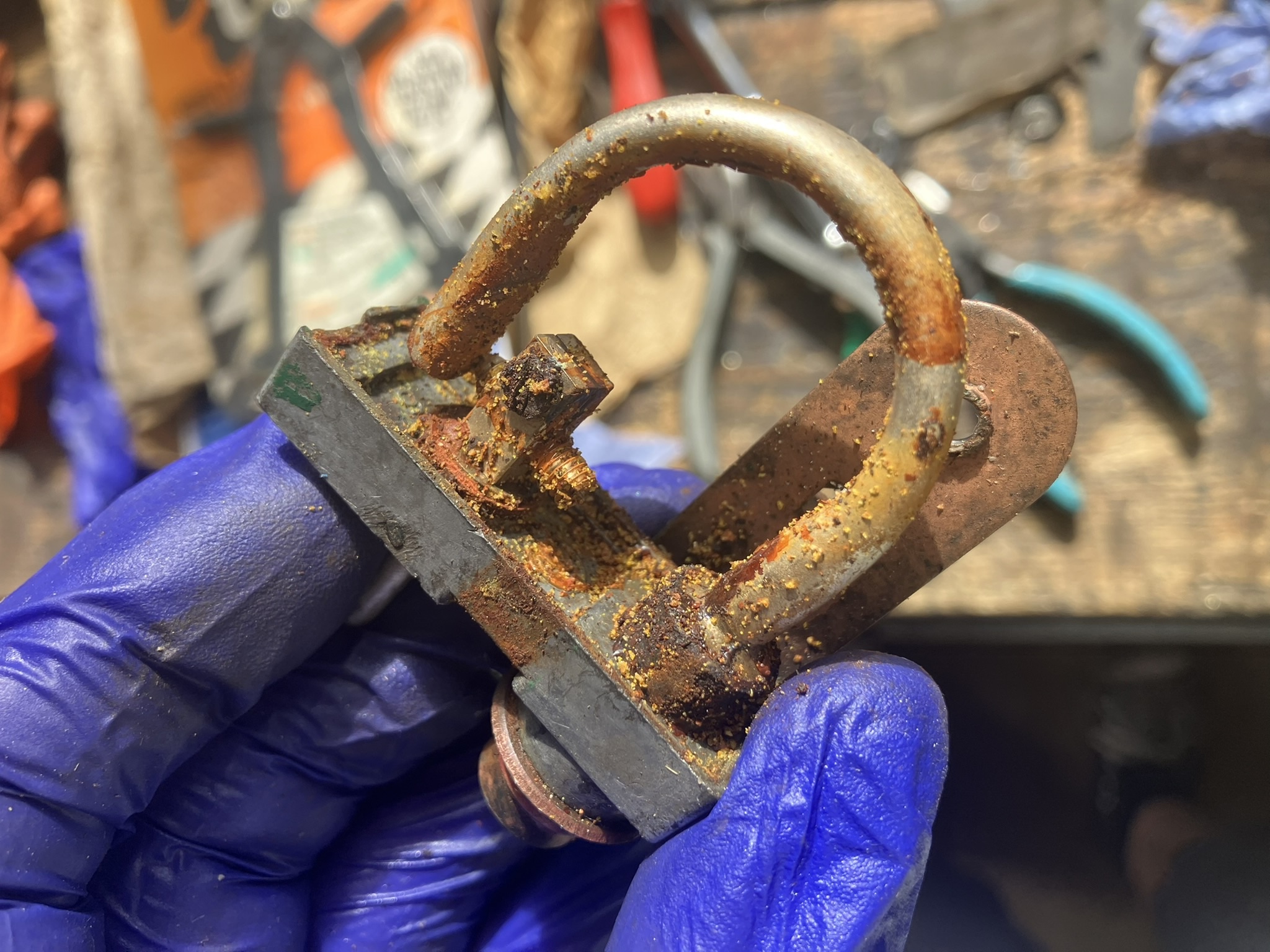
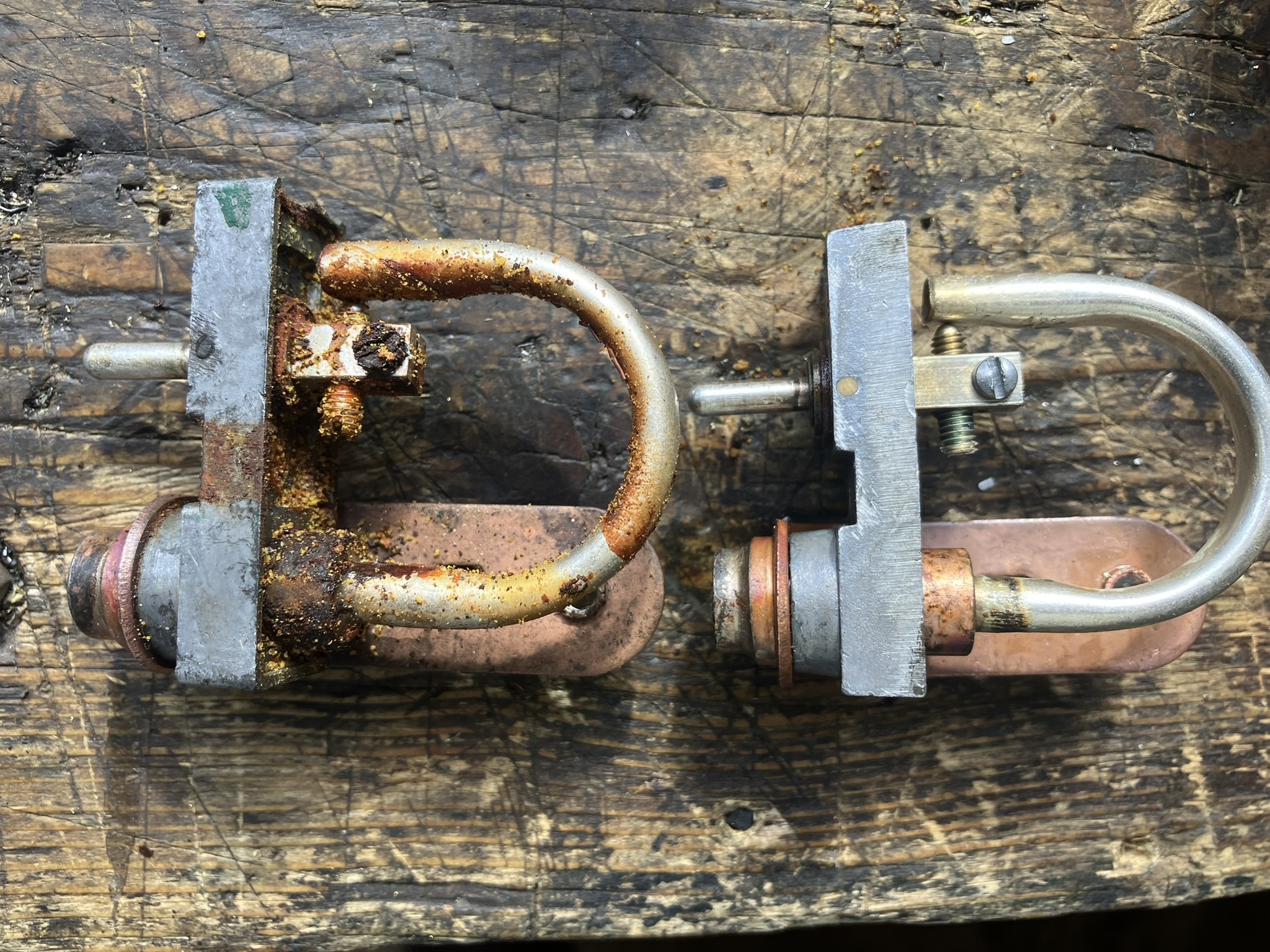
I’m so glad i didn’t just fit it in its 60 bar mode! In the end, i’ve used my original switch – recalibrated to 64 kg/ cm2 – and used only the cover from the spare i bought.
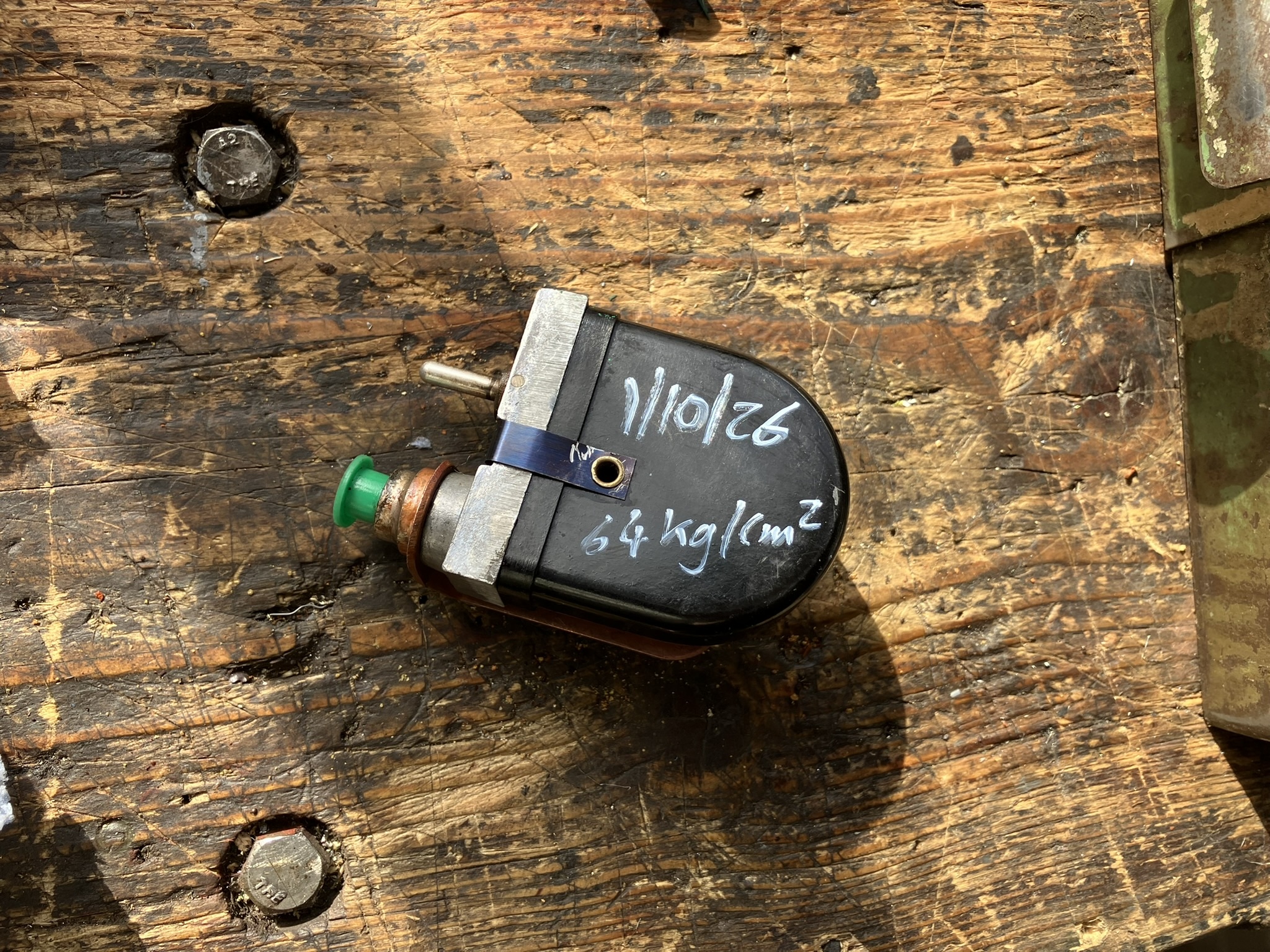
I think I’ve worked out why – when still in its 22 bar mode – it didn’t work when refitted. I’m guessing that there is residual pressure in the switch that is not released when the engine is turned off or even when the pressure regulator bolt is loosened. After refitting and starting the engine, I think pressure in my car didn’t drop to 22 bar or below – so my light never came back on. I think that – again, when it was in its 22 bar mode – if I’d opened the brake bleed screws, pressure would have dropped to zero and my light would have come on – but it still needed fixing.
Now that it’s correctly recalibrated, if pressure drops to anything below 64 bar the light will come back on. And, if my theory is correct, there can’t be that much residual pressure in the system.
Next/ last job is to bleed the front brakes again. then i can investigate the suspected air ingress on my carb.
I agree Colin. Those yellow H1s look fine.
I bought some yellow P45T bulbs for my headlights from Citroen Classics – 2 to fit and 2 as spare. The two I fitted had ‘burnt’ with only about 1 hour of use. The filaments haven’t failed. The yellow paint/ coating has burnt and gone dark brown on one side of the globes, meaning the light isn’t penetrating…..
i’ll try the other two but some/ all might be going back for a refund.
Late 1967 DS21 Pallas:
If the internal circuitry was understood, then one could surely get one or wire up more than one modern relays to do the same thing.
Best Regards,
Michael (Isle of Wight)Below is an example of a modern relay that i think would do the same job. Do you agree Peter?
BUT I would go for easy first, and assume you’ve either got the relays muddled and so wired wrongly…..
Test each relay: unplug all the 4 pins and then put a test bulb or other tester/ meter between pins 2 and 3 and test for continuity. If it’s a relay for the QI lights, there should be NO continuity. So you should find two of your relays are like this. On the flash relay, pins 2 and 3 are in contact – so there should be continuity. You should onlu=y have one relay like this.
…..or have the correctly identified the flash function relay – but have it wired wrongly.
Pin 1 is a source of ‘flash’ power in from the INDICATOR stalk
(This source of power also provides the power to energise the relay solenoid coil)Pin 2 is OUT to the loom and on to the two main beams
Pin 3 is a source of power in from the TWISTY LIGHT stalk
Pin 4 is out to ground from the relay solenoid coil.
here is a Bosch example of a modern relay. Peter can confirm if this would do the same job as the Sanor.

And here is another. Different brand, same thing, same function.

Yep. Been inside those black domed Sanor relays….
If you’ve got three relays, then your car probably had/ has had a flasher feature. For a late 67 year/ early 68 model, if it only had two replays, they are the one for the QI/ long range lights.
If your car has a flasher (as the three relays suggest) then when you move the indicator leaver towards you, it should spring back – that’s the flash function. if, having put them on, your indicators are cancelled by pulling the lever towards you, then that particular switch unit DOESN’T have the flash function – regardless of what your relays suggest.
I can’t make out your nomenclature for your wiring diagram. On my diagram for sept 67 to december 67, part 20 is the alternator and part 40 is the cigar lighter?
The three relays behind the dash are not the same. Two ARE the same – they are one each for each of the QI lights.
The other one is for the headlight flasher. The normal high beam power passes straight through this in normal operation. By which i mean the high beams are not fed from the relay but ARE fed ‘through’ the relay.AND i previously made something to help me understand the flasher relay. See photo.
For the main beam, power goes…
From the battery into the twisty light stalk via black-ended wire N2
For main beam, yellow-ended wire J22 leaves the twisty stalk and splits in two inside the loom. One branch goes to the pull/ push switch that controls the long range lamps. that is because the longe range lights can / should only work when you are on main beam.the other branch of yellow-ended wire J22 is destined for the main beams in the wings BUT, first it goes to terminal 3 on the flasher relay. As i said at the start, it passes straight through the relay in normal use but it also provides power to the relay so that the headlight flasher function works.
getting back to j22 and that relay. it goes into the relay at terminal 3, and comes out of terminal 2 as a Bc23 a white tipped wire. back within the loom, the wire splits into three branches. two branches go to each of the wings to power the main beams, the other branch goes up to the dash to illuminate the blue high beam warning light.
In case you were wondering, the signal for the main beam flasher at the relay comes from a wire on the indicator stalk – not the twisty light stalk. So the power that lights your main beams goes through the twisty stalk and passes through the relay.
The power for the flash feature – in the same relay – comes straight from the battery. the indicator stalk just provides the power to close the solenoid within the relay.See this labelled diagram of the flasher relay. pay particular attention to the numbering of the pins. Not the colour of the arrows. the high beam power goes into the relay via pin 3, straight through the ‘normally closed contacts, and straight out of the relay via pin 2.


On the other two relays, pin 1 is 12V in, pin 2 is 12v out to power the two long range lamps. Pin 3 is the solenoid triggering signal into the relay from the twisty light stalk and pin 4 is the ground for the trigger signal.

I bought one of these sockets for the gearbox/ bell housing and the ARB.
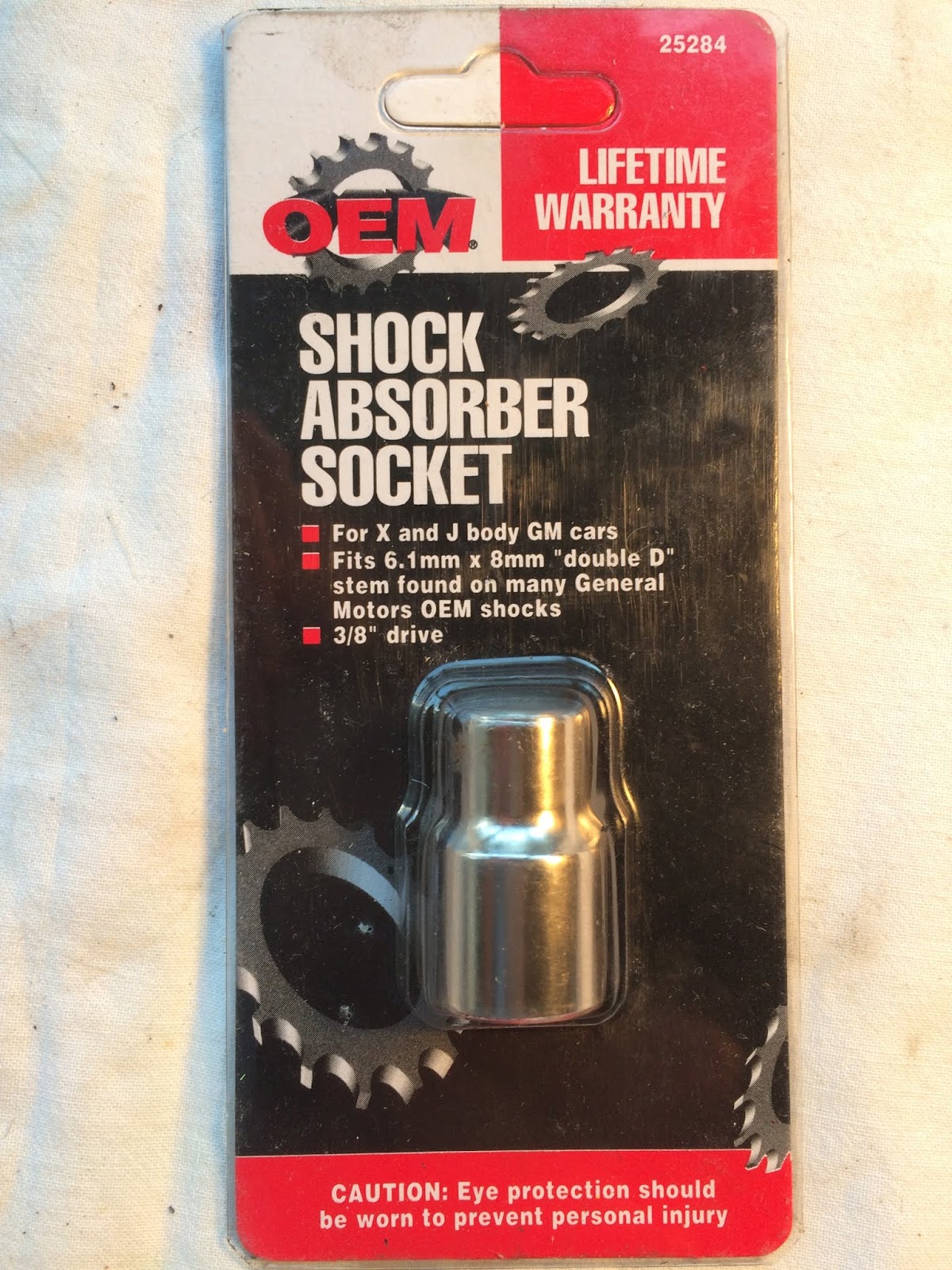
It has a slot end rather than a hex end.
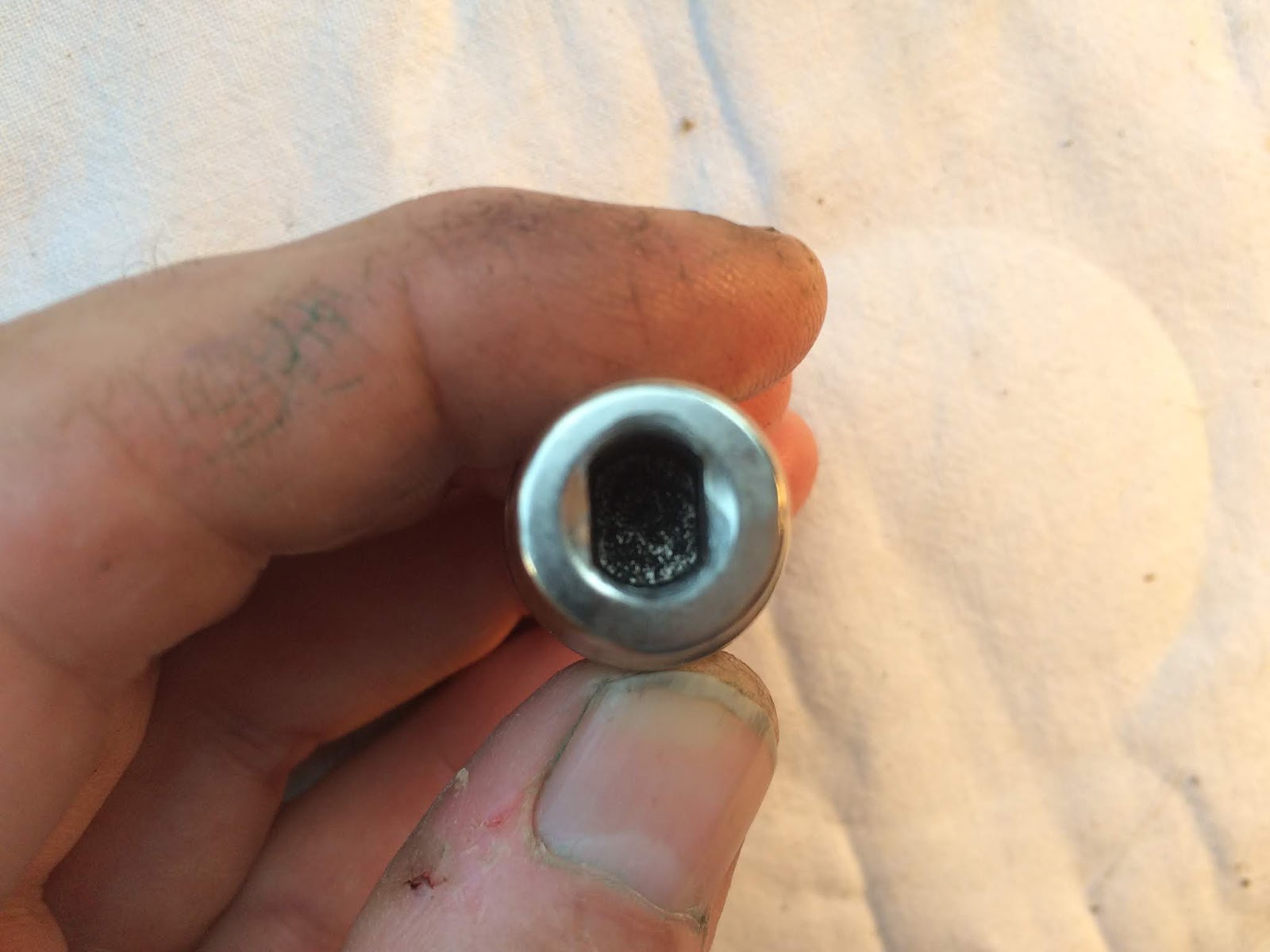
Googling ‘shock absorber socket’ and/ or ‘25284’ might be enough to find one – even if it’s branded differently. It fits quite well, but if you lightly tap it onto the special screw it grips even better.
It’s a really simple circuit.The dash warning light is simply negatively earthed by the hydraulic switch. it would be easy to put a buzzer in behind the dashboard, but you’d need to put up with it being on when you first start the car and until pressure rises. Realistically though, the red idiot light is right in front of you when you’re driving so should be hard to miss. Should be…
I bought another pressure switch from Mark Hidding over in Holland. It’s still a sealed unit and I gave it a test this morning. I thought you might like to see a video of that test.
At zero pressure the dashboard warning light should be illuminated. As pressure reaches between 60 and 70 bar, the warning light should extinguish – meaning it’s safe to drive the car. If pressure drops to below 60 bar, the dash warning light should illuminate again. the test shows both of these tests.
Triggering at 60 bar, the switch is *just* within spec. I may dismantle and clean my other switch and see if that alters the trigger pressure. Ultimately I will just recalibrate it if need be.
If you can find a local outlet that sells furniture or suitcases (or both!), get some large sachets of silica gel from them. Wherever you store your tank, loosely close the apertures up – if only for dust – but dangle a couple of silica gel sachets inside on wires. They will take some moisture out of the air.
Could you blow warm dry air through it with a hairdryer, then dangle some silica gel sachets inside it and then wrap it all up in polythene sheet while the air is till dry? It might be better than nothing and would probably be enough under the circumstances.
-
AuthorPosts